


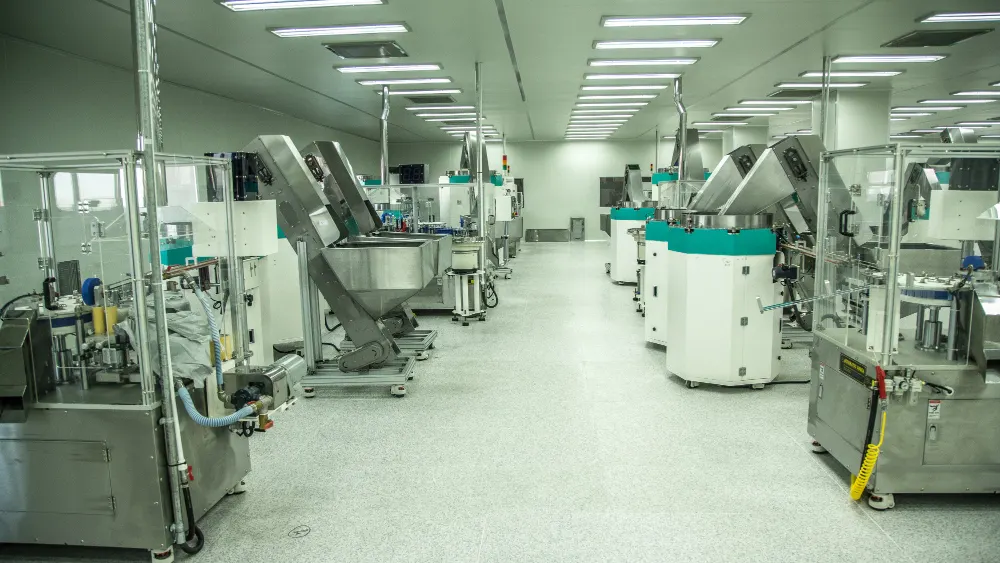
Compressed air plays a critical role across pharmaceutical manufacturing, from powering equipment to supporting packaging, processing, instrumentation, and controlled production environments. Because compressed air can come into direct or indirect contact with products, selecting the right air compressor for pharmaceutical industry applications requires much more than simply comparing pressure ratings or machine capacity.
Pharmaceutical facilities must consider air purity, contamination risk, energy efficiency, reliability, regulatory expectations, and long-term operating costs. The right compressor should support both production performance and product quality while reducing the risk of oil, moisture, particles, or microbial contamination entering the air supply.
This guide explains the key factors Australian pharmaceutical manufacturers should evaluate when choosing a compressor and designing a dependable pharmaceutical compressed air system.
Why Compressed Air Quality Matters in Pharmaceutical Manufacturing
Compressed air is often treated as a utility, but in pharmaceutical production it can directly influence product quality and process integrity.
Depending on the application, compressed air may be used for:
- Pneumatic equipment and actuators
- Tablet manufacturing machinery
- Product conveying
- Filling and packaging systems
- Instrumentation and control systems
- Cleaning and drying processes
- Laboratory equipment
- Air knives and process applications
When compressed air comes into contact with pharmaceutical products, packaging surfaces, production equipment, or sensitive materials, contamination becomes a major concern.
Oil vapour, condensed moisture, particles, microorganisms, and other contaminants can compromise product quality. This is why selecting the correct air compressor for pharmaceutical industry environments must begin with understanding the required air purity level.
Understand the Required Air Quality
The first step is identifying how the compressed air will be used.
Not every application requires the same level of air purity. Compressed air used only for general pneumatic tools may have different requirements from air that directly contacts pharmaceutical products.
Facilities should evaluate whether the air is used for direct product contact, indirect product contact, instrumentation, packaging, or general plant operations.
An effective compressed air system in pharmaceutical industry environments normally includes multiple stages of treatment to control contaminants.
Common contaminants include:
- Oil aerosols and vapours
- Water vapour and condensate
- Solid particles
- Microorganisms
- Rust or corrosion particles from piping
The required filtration and drying configuration should be determined according to the risk associated with each application.
Consider Oil-Free Compressor Technology
Oil contamination is one of the most important considerations in pharmaceutical compressed air applications.
Traditional oil-lubricated compressors use oil inside the compression process. Although filtration systems can remove a significant amount of oil from compressed air, there is always a possibility of contamination if filtration systems fail or operating conditions change.
For sensitive pharmaceutical manufacturing processes, oilless air compressors or oil-free compressor technologies can significantly reduce this risk.
Oil-free compressors are designed so that oil does not enter the compression chamber. This makes them particularly suitable for industries where air purity is essential.
Applications that may benefit from oil-free compressed air include:
- Pharmaceutical manufacturing
- Medical product manufacturing
- Laboratory environments
- Food processing
- Electronics manufacturing
- Biotechnology production
Choosing an oil free air compressor system can simplify air treatment requirements and help reduce contamination risks throughout the production process.
Evaluate Compressor Capacity Carefully
Compressor capacity should match the actual compressed air demand of the facility.
Oversized compressors can lead to inefficient operation, excessive energy consumption, and unnecessary investment costs. Undersized compressors may struggle to maintain stable pressure during peak production periods.
Before selecting an air compressor for pharmaceutical industry operations, manufacturers should conduct a compressed air demand assessment.
This assessment should consider average air demand, peak demand, future expansion plans, operating pressure, production schedules, and possible leakage within the compressed air network.
Pharmaceutical plants with fluctuating demand may benefit from variable speed drive compressor technology. These systems automatically adjust compressor output based on real-time compressed air requirements.
Instead of running continuously at maximum capacity, the compressor increases or decreases motor speed as demand changes.
This can improve energy efficiency while maintaining stable system pressure.
Pay Attention to Pressure Requirements
Higher pressure does not automatically mean better performance.
Operating a compressed air system at unnecessarily high pressure increases energy consumption and can worsen leakage losses.
Each production application should therefore be evaluated according to its actual pressure requirement.
For example, packaging equipment may operate at one pressure level while process machinery requires another. Designing the compressed air system around the highest possible pressure requirement can make the entire system less efficient.
Where practical, separate pressure zones or local pressure regulation can improve system efficiency.
Maintaining stable pressure is equally important. Significant pressure fluctuations can affect pneumatic equipment performance, filling accuracy, packaging systems, and other automated processes.
Select the Right Air Drying Technology
Moisture is another major contamination risk within pharmaceutical compressed air systems.
Atmospheric air naturally contains water vapour. During compression, this moisture becomes concentrated. When compressed air cools, water can condense inside storage receivers, dryers, filters, and piping.
Excess moisture can cause several problems, including:
- Corrosion inside compressed air piping
- Microbial growth
- Equipment damage
- Product contamination risks
- Reduced filter performance
Pharmaceutical applications often require very low pressure dew points, particularly where compressed air contacts sensitive materials or production environments.
Different dryer technologies are available depending on the required air quality.
Refrigerated dryers are commonly used for general industrial applications, while desiccant dryers can achieve significantly lower dew points for sensitive processes.
The appropriate dryer should therefore be selected according to environmental conditions and pharmaceutical production requirements.
Install Effective Filtration
Even when using oil-free or oilless air compressors, filtration remains essential.
Ambient air entering a compressor contains dust, moisture, microorganisms, and other airborne contaminants. Additional particles can also enter the system through piping corrosion or equipment wear.
A properly designed compressed air system in pharmaceutical industry applications typically uses multiple filtration stages.
These may include:
- Particulate filters
- Coalescing filters
- Activated carbon filters
- Sterile filters where required
Each filter serves a specific purpose.
Particulate filters remove solid contaminants, while coalescing filters capture fine aerosols and moisture. Activated carbon filtration can help remove hydrocarbon vapours and odours.
Sterile filtration may be necessary in applications where compressed air directly contacts sensitive pharmaceutical products.
Consider Compressed Air Standards
Compressed air quality should be measured rather than assumed.
ISO 8573-1 is widely used to classify compressed air purity according to particles, water, and oil content. Pharmaceutical manufacturers can use this framework to define the required compressed air quality for different production applications.
The appropriate purity class depends on how the air is being used.
For highly sensitive pharmaceutical processes, organisations may specify very low contamination limits, particularly for oil and moisture.
Routine air quality testing can help verify that the system continues to meet required standards over time.
Testing may include measurements for:
- Oil content
- Pressure dew point
- Particle concentration
- Microbial contamination
Regular monitoring is especially important because filters, dryers, and other treatment equipment can degrade over time.
Assess Energy Efficiency
Compressed air is often one of the more energy-intensive utilities in industrial facilities.
Energy efficiency should therefore be a major consideration when selecting an air compressor for pharmaceutical industry production.
The purchase price of a compressor represents only part of its total lifecycle cost. Electricity consumption over several years can significantly exceed the initial equipment cost.
Several factors can influence energy efficiency, including compressor type, motor efficiency, pressure settings, control systems, air demand patterns, and system leakage.
Variable speed drive compressors can provide considerable efficiency advantages in facilities where compressed air demand changes throughout the day.
Heat recovery systems may also allow pharmaceutical manufacturers to recover compressor-generated heat for water heating or other facility applications.
Check Reliability and Redundancy Requirements
Compressed air failure can interrupt manufacturing operations and create costly production downtime.
Pharmaceutical manufacturers should therefore consider redundancy when designing their compressed air infrastructure.
Some facilities operate multiple compressors instead of relying on one large machine. This allows production to continue if one unit requires maintenance.
A typical configuration may include:
- Base-load compressor
- Trim compressor
- Standby compressor
This approach can provide greater operational flexibility while improving overall system reliability.
Automated compressor control systems can also coordinate multiple compressors and ensure that the most efficient combination operates according to current demand.
Evaluate Maintenance Requirements
Reliable compressed air performance depends heavily on preventive maintenance.
Compressors, dryers, filters, drains, and piping systems should all be maintained according to recommended service intervals.
When comparing compressor technologies, pharmaceutical facilities should evaluate maintenance complexity, spare parts availability, service accessibility, filter replacement requirements, and long-term operating costs.
Oil-free technologies may reduce certain contamination risks, but they still require regular inspection and servicing.
Maintenance planning should also include routine leak detection.
Compressed air leaks can waste a considerable amount of energy and reduce system pressure. Regular leak surveys and repairs can improve both system reliability and operating efficiency.
Design the Entire Compressed Air System Properly
Choosing the right compressor is only one part of developing a dependable compressed air network.
A high-quality compressor cannot compensate for poorly designed piping, undersized dryers, ineffective filtration, excessive pressure drops, or inadequate air storage.
A complete compressed air system in pharmaceutical industry facilities should consider:
- Compressor selection
- Air dryers
- Filtration systems
- Air receivers
- Condensate management
- Piping layout
- Pressure control
- Monitoring equipment
- Backup capacity
Piping design is particularly important.
Incorrect pipe sizing can create excessive pressure drops, causing compressors to work harder to maintain required pressure.
Looped distribution systems can often improve pressure stability by allowing compressed air to reach production equipment from multiple directions.
Plan for Future Production Growth
Pharmaceutical manufacturing requirements can change quickly as production volumes increase or new product lines are introduced.
The compressed air system should therefore provide enough flexibility to accommodate future expansion.
However, installing a significantly oversized compressor is usually not the most efficient solution.
A modular approach can provide better flexibility. Additional compressors can be added when production demand increases.
Facilities should also consider whether future production equipment will require higher air purity levels or different pressure requirements.
Planning for future expansion during the initial system design can reduce costly modifications later.
Choosing the Right Compressor for Pharmaceutical Applications
Selecting the correct air compressor for pharmaceutical industry operations requires a balance between air quality, reliability, energy efficiency, and lifecycle cost.
The compressor should be selected as part of a complete compressed air strategy rather than as an isolated piece of equipment.
Australian pharmaceutical manufacturers should begin by clearly defining application requirements, air quality targets, operating pressure, compressed air demand, and future expansion plans.
For processes where contamination risks must be minimised, oil-free or oilless air compressors can provide an important advantage by eliminating oil from the compression process.
Combined with appropriate filtration, drying, monitoring, piping, and preventive maintenance, the right compressor can support reliable production while helping maintain consistent pharmaceutical product quality.
FAQ
What type of air compressor is suitable for pharmaceutical manufacturing?
Oil-free compressors are commonly preferred for sensitive pharmaceutical manufacturing applications because they prevent lubricating oil from entering the compression chamber. The appropriate compressor type ultimately depends on air quality requirements, operating pressure, capacity, and whether the compressed air directly or indirectly contacts pharmaceutical products.
Why is pharmaceutical compressed air quality important?
Pharmaceutical compressed air can interact with products, production equipment, packaging materials, and controlled environments. Contaminants such as oil, moisture, particles, or microorganisms can affect product quality and manufacturing reliability. Proper filtration, drying, and air quality monitoring help reduce these risks.
What is the role of an oil-free air compressor in pharmaceutical production?
Oil-free compressors reduce the risk of oil contamination by preventing lubricating oil from entering the compression process. This makes them suitable for pharmaceutical and other sensitive manufacturing applications where high compressed air purity is required.
What should be included in a compressed air system in pharmaceutical industry facilities?
A complete compressed air system in pharmaceutical industry facilities may include compressors, air dryers, filtration stages, receivers, condensate management, distribution piping, pressure controls, monitoring systems, and backup capacity. Each component should be selected according to the required air quality and production demand.
How often should pharmaceutical compressed air quality be tested?
Testing frequency should be determined through the facility’s quality management and risk assessment processes. Regular monitoring of particles, moisture, oil content, and, where required, microbiological contamination helps verify that the compressed air system continues to meet the required purity specifications.